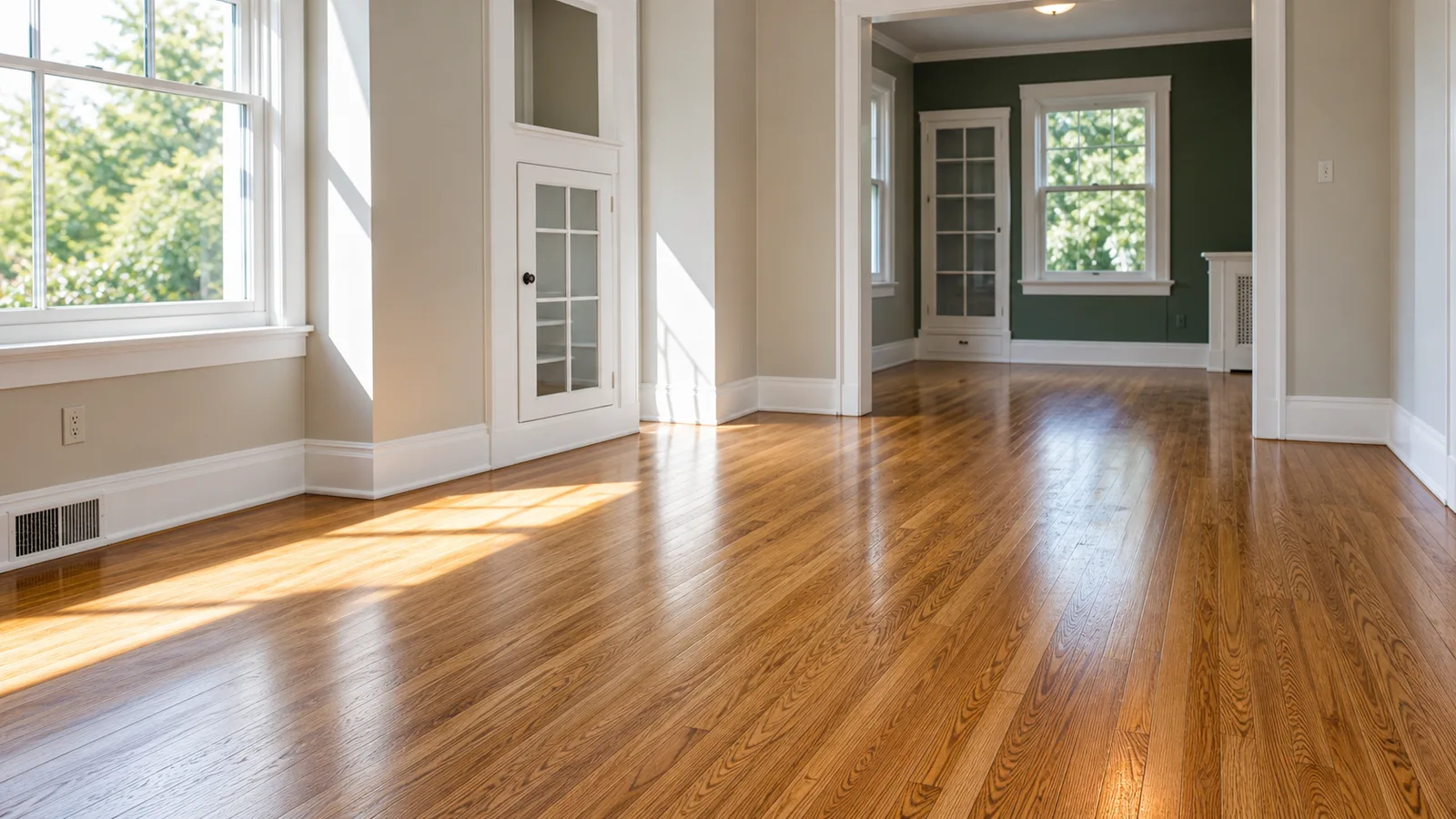
There's probably oak under that carpet
A lot of Rochester's older homes — the colonials, four-squares, and bungalows built from the 1900s through the 1950s — were built with solid oak floors that later got covered in carpet. If that's your house, you may be standing on a floor worth thousands that just needs refinishing. Refinishing original hardwood is usually cheaper than installing new flooring, and buyers love real, restored wood. The first question is whether yours can take it.
---
Can your floor be refinished?
Solid hardwood can be sanded and refinished several times over its life. To check yours:
- Pull back a corner of carpet in a closet or low-traffic spot and see what's under it. Solid oak strip flooring is the common find.
- Check the thickness at a vent or threshold. Solid wood has room to sand; if it's already been sanded paper-thin or it's a thin engineered/veneer floor, it may not survive another pass.
- Look at the damage. Surface scratches, old finish, and stains sand right out. Deep gouges, pet-urine black stains soaked into the wood, water-cupped boards, or large gaps are harder — sometimes individual boards get woven in and replaced.
If there's solid wood with thickness left, it's almost always worth refinishing over replacing.
---
What it costs in 2026
- Standard sand and refinish: $3–$6 per square foot. A 300 sq ft room runs roughly $900–$1,800.
- With board repairs or weave-ins for damaged sections: more, depending on how much.
- Whole main floor: often $3,000–$7,000, far less than the $9–$18/sq ft of new hardwood installed.
Refinishing is one of the highest-return things you can do to an older home for the money.
---
Dust, fumes, and the timeline
Modern refinishing is cleaner than it used to be:
- Dust-containment sanding keeps the mess way down versus old open-sanding, though no job is fully dust-free.
- Finish choice matters in Rochester winters. Oil-based finishes are durable but smell strong and cure slowly; water-based finishes have lower odor, dry faster, and matter more in winter when you can't open windows for days. Discuss this with your installer for the season.
- Timeline: sanding and finishing a few rooms is usually 2–4 days of work, plus cure time before you move furniture back (longer for oil-based, especially in cold months).
Plan to stay off the floors during cure. In winter, ventilation is limited, so the lower-odor finishes earn their keep.
---
Refinish vs replace
Refinish when there's solid wood with thickness left and the damage is surface-level or repairable. It's cheaper, faster, keeps the home's character, and avoids landfill.
Replace when the wood is sanded too thin, rotted, water-destroyed, or it's a thin veneer that can't be sanded. Then look at new hardwood or, for moisture-prone areas, LVP.
---
Mistakes to avoid
- Carpeting over good hardwood instead of refinishing it — you're hiding value.
- Sanding a floor that's already too thin. Check thickness first; over-sanding ruins it.
- Oil-based finish in deep winter without planning for slow cure and odor.
- DIY drum sanders on irreplaceable old oak — gouges from an inexperienced hand are permanent.
---
A practical next step
Peek under the carpet in a closet and check what's there and how thick it is. If you find solid oak with meat left on it, you're likely sitting on the cheapest big upgrade in the house.
A good flooring installer can tell you whether your floors have enough thickness to refinish, plan board repairs for the rough spots, and recommend the right finish for the season.