Staying put takes a little planning
Most people want to grow old in their own home, not move. In Rochester that means adapting houses that were never designed for it — older homes with steps up to the door, narrow doorways, and bathrooms upstairs. The good news: a handful of well-chosen modifications make a home work for decades, and many are modest projects, not gut renovations. The key is doing them before they're urgent, not after a fall.
---
Start with the bathroom
The bathroom is where most aging-in-place accidents happen, so it's the first priority.
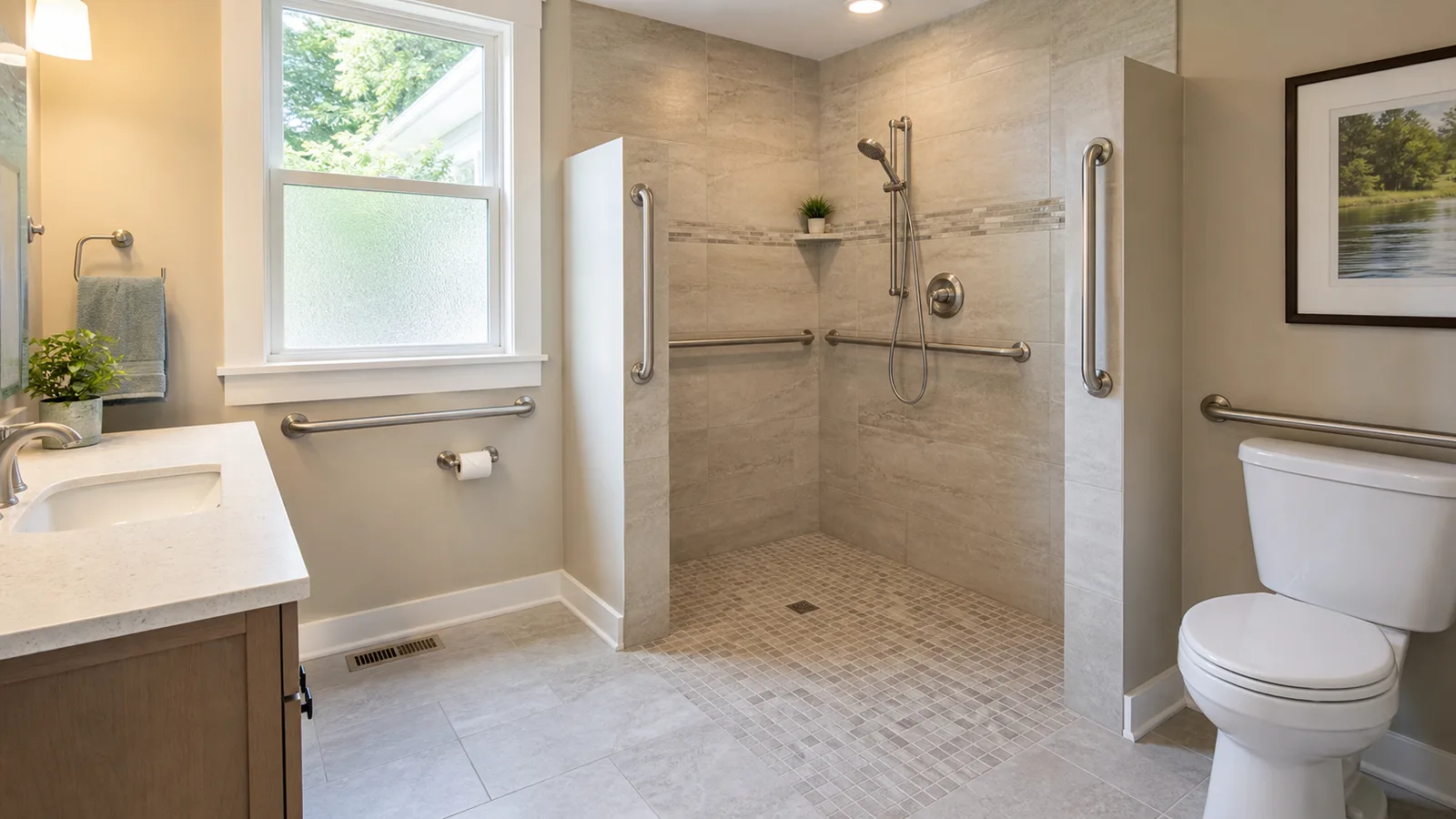
- Curbless (zero-threshold) shower you can walk or roll into, with a bench and a handheld sprayer. The biggest single upgrade.
- Grab bars — real ones anchored into blocking, not suction cups — at the shower and toilet.
- Comfort-height toilet and a slip-resistant floor.
- A first-floor full bath if all your bathrooms are upstairs. This is the change that most often lets someone actually stay.
---
Then the entry and main floor
- A no-step entry — a gentle ramp or regraded path to at least one door. Rochester's older homes almost always have steps.
- Wider doorways (32"+ clear) for walkers and wheelchairs, where feasible.
- A first-floor bedroom option, even a flex room that can become one, so stairs aren't a daily requirement.
- Lever door handles and rocker switches instead of knobs and toggles — small, cheap, and easier on arthritic hands.
---
Lighting and small safety wins
- Brighter, layered lighting throughout — vision changes with age, and Rochester winters are dark.
- Motion-sensor lights on stairs, halls, and the path to the bathroom at night.
- Stair railings on both sides, secure and continuous.
- Removing trip hazards — thresholds, loose rugs, uneven old flooring.
---
What it costs in 2026
- Grab bars, lever handles, lighting, small safety fixes: a few hundred to ~$2,000.
- Curbless shower conversion: $10,000–$20,000 (waterproofing and floor slope matter most).
- No-step entry / ramp: $1,500–$6,000 depending on grade and material.
- Adding a first-floor full bath: $15,000–$30,000+, depending on whether plumbing reaches.
- Widening doorways: $1,000–$3,000 each, more if a wall is load-bearing.
---
The older-home reality
Rochester's housing stock makes some of this harder: a curbless shower needs careful floor framing to slope and drain; widening a doorway may hit a load-bearing wall or old wiring; adding a first-floor bath depends on getting plumbing there. None of it is a dealbreaker, but it means a real plan beats piecemeal fixes. Doing the bathroom and entry together, for instance, is more efficient than one at a time.
---
Mistakes to avoid
- Waiting until after an injury to start — urgent work is rushed and limited.
- Suction-cup grab bars that aren't anchored into structure. They fail when needed most.
- A curbless shower with cut-rate waterproofing — it rots in our climate.
- One-off fixes when a coordinated plan would be cheaper and work better together.
---
A practical next step
Walk your home as if mobility were limited: every step, narrow door, and the path to the bathroom at night. List the barriers. Usually the bathroom and the entry rise to the top.
A good whole-home remodeler can build a staged aging-in-place plan — do the high-impact bathroom and entry work now, plan the rest — so the house keeps working for you for years.