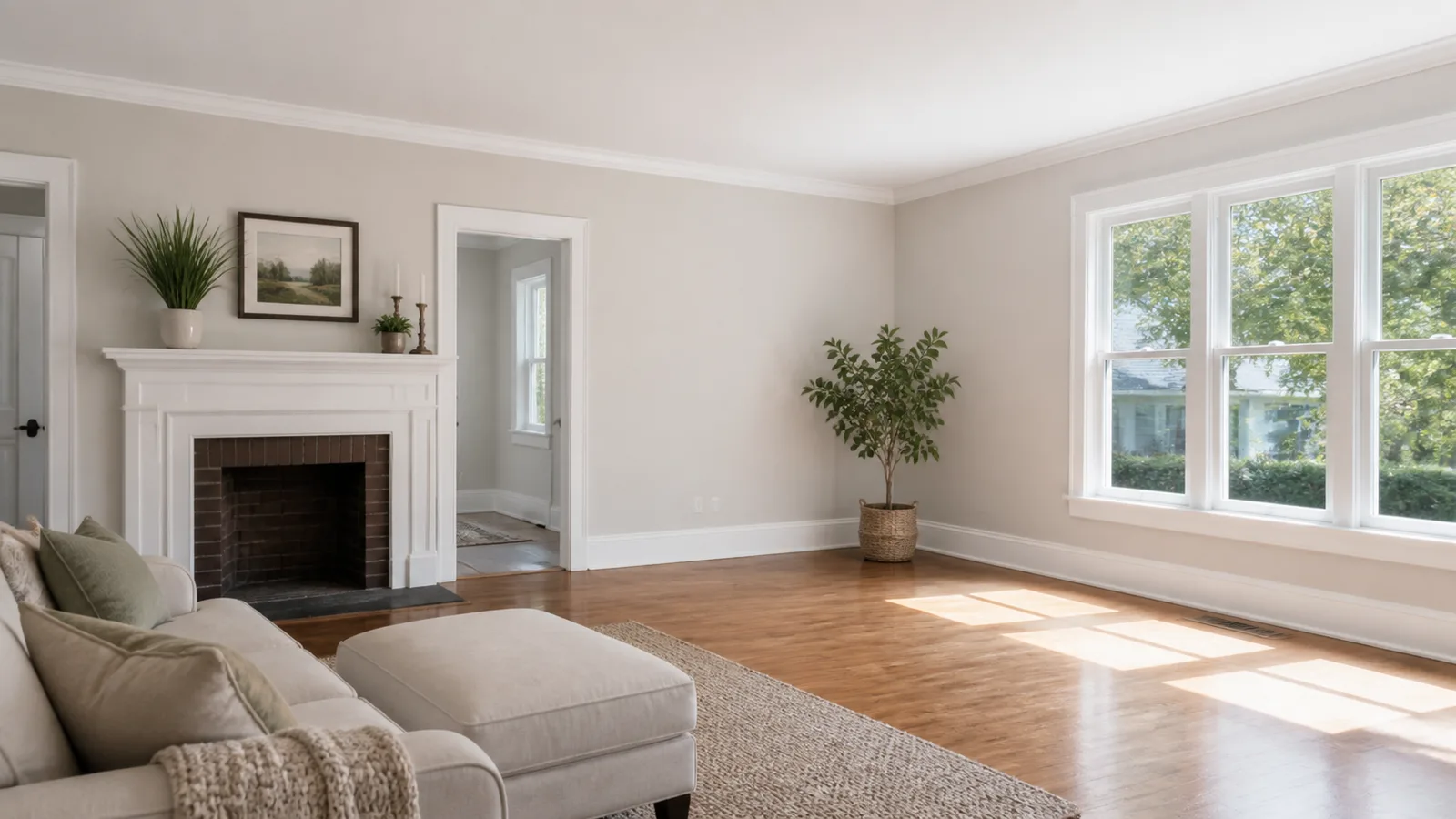
The cheapest way to make a house feel new
Paint is the highest-return dollar in home improvement. A fresh, well-applied interior repaint changes how every room feels for a fraction of what a remodel costs, and it's the single most reliable thing you can do before listing a house. But "worth it" hinges almost entirely on prep and on picking the right moment. A rushed paint job over the wrong surface looks worse in a year than the tired paint you started with.
---
When repainting earns its keep
Before you sell. Neutral, clean walls photograph better and read as move-in ready. In Rochester's market, a tired or boldly colored interior gives buyers a reason to negotiate. Repainting in warm neutrals is one of the few pre-sale spends that consistently returns more than it costs.
After you buy. Painting before the furniture arrives is far cheaper and faster than working around a full house. If you've just closed on an older Rochester home, this is the easy window.
When the surface is failing. Peeling, cracking, chalky, or nicotine- and water-stained walls aren't a style problem — they're a maintenance one. Failing paint stops protecting the surface underneath.
When the house feels dark. Our winters are long and gray. A lighter, warmer wall color does real work from November through April, when the sun barely shows and rooms feel closed in.
---
What it costs in 2026
For professional interior painting in a Rochester home, walls, ceilings, and trim, including proper prep:
- Single room (bedroom, office): $500–$1,200 depending on size, ceiling height, and trim.
- Main floor or several rooms: $3,000–$7,000.
- Whole-house interior: $7,000–$15,000+, more for tall stairwells, heavy trim, or extensive prep.
The biggest variable isn't the paint — it's the prep. A house with smooth, sound walls paints fast. A house with plaster cracks, old wallpaper, or peeling layers needs hours of repair before a brush touches it, and that's where the hours go.
---
What older Rochester homes add to the job
Rochester's housing stock is old, and old walls change the work.
Plaster, not drywall. Many pre-1960 homes have plaster walls that crack along lath lines and at stress points. Those cracks need to be cut, filled, and sometimes re-bonded, not just painted over, or they telegraph straight back through the new coat.
Old wallpaper. Painting over wallpaper is a shortcut that almost always shows — seams and edges ghost through. Removing it properly, especially multiple layers in an older home, adds real time but is the difference between a clean wall and a lumpy one.
Lead paint. Homes built before 1978 may have lead-based paint in older layers. Disturbing it — sanding, scraping — has to be handled with lead-safe practices. This is a real factor in much of Rochester's older stock and a reason to be careful about who and how, not something to ignore.
Nicotine and water stains. These bleed through ordinary paint. They need a stain-blocking primer first, or the stain comes back through every coat you put on.
---
Why prep is the whole game
You're paying for preparation, not paint. Good interior work is mostly what happens before color goes on: protecting floors and fixtures, filling and sanding, repairing cracks, removing failing material, caulking gaps, and priming where the surface or stains demand it. A crew that shows up and starts rolling color the first hour is skipping the part that makes it last.
Done right, a quality interior repaint in our climate holds up for many years. Done fast over bad prep, it peels at the seams and shows every flaw by the next winter.
---
Color choices that hold up here
- Lean warm and light in main rooms. Rochester's gray light makes cool, stark whites read cold and flat. Soft warm whites and greiges keep rooms feeling bright without going sterile.
- Durable finishes where life happens. Kitchens, baths, hallways, and trim want a scrubbable finish — eggshell or satin on walls, semi-gloss on trim — so they clean up instead of marking.
- Resist the bold accent wall if you're selling soon. What you love, a buyer discounts.
---
Mistakes that waste the money
- Painting over the real problem. Color over peeling paint, ghosting wallpaper, or an unaddressed plaster crack just buys a few months.
- Skipping primer on stains or bare repairs. Water and nicotine bleed through; fresh patches flash without it.
- Cheaping out on trim and ceilings while doing the walls. Half-done rooms look half-done.
- Hiring on price alone. The low bid usually wins by cutting prep, which is the only part that determines how long it lasts.
---
A practical next step
Walk each room in good daylight and look closely at the walls, not the color: any peeling, cracking, stains, or wallpaper edges? Press on suspect plaster. Note which rooms feel dark and which surfaces are actively failing versus just dated.
That read tells a painting contractor how much prep the job really needs — which is the honest basis for a quote, and the thing a cheap estimate is usually leaving out.