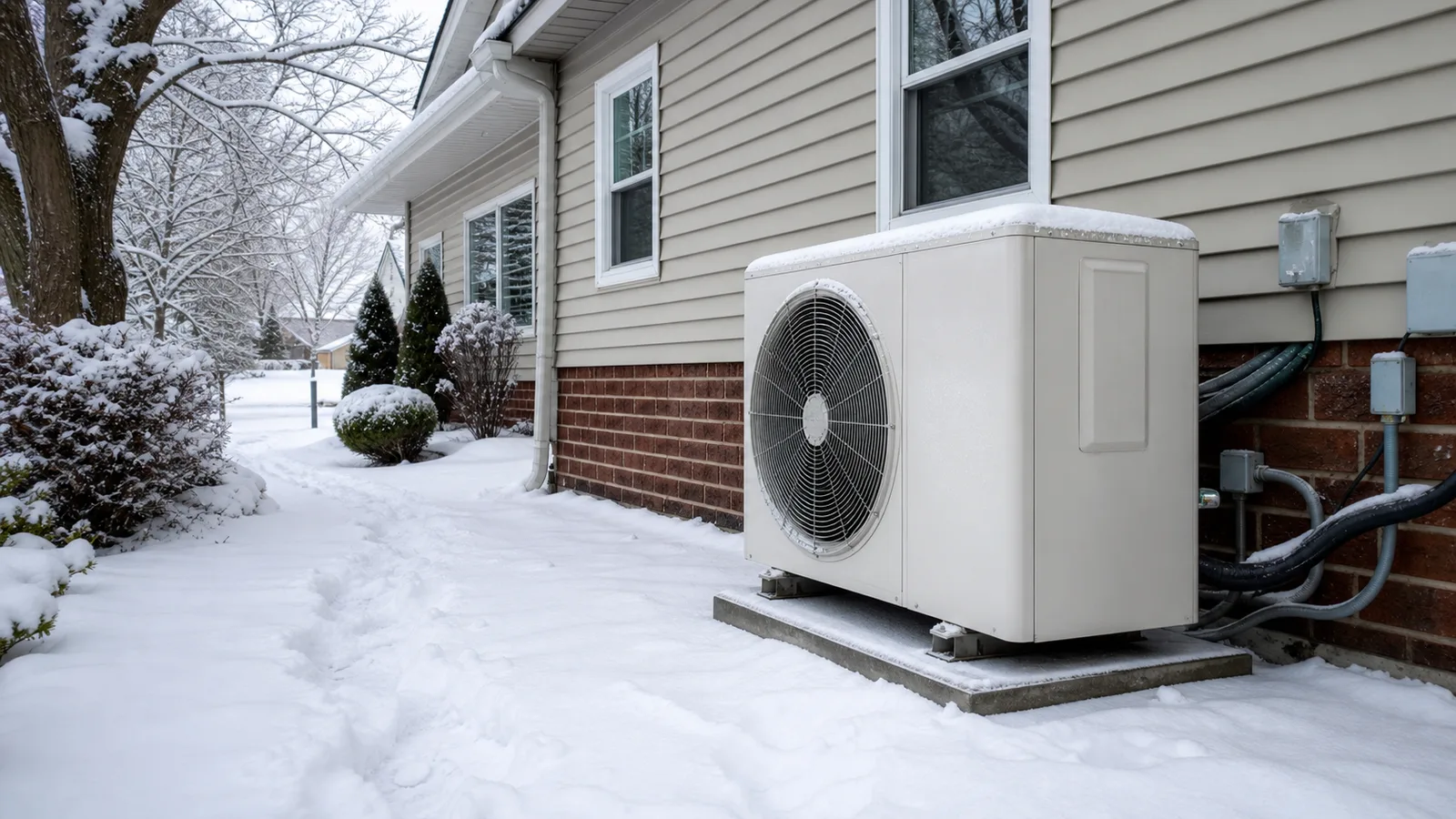
The question every Rochester homeowner is asking
New York is pushing hard toward electric heat, and the ads make heat pumps sound like a no-brainer. But anyone who's lived through a Rochester January has the same doubt: when it's single digits and the wind is coming off the lake, will an electric heat pump actually keep the house warm? The honest answer is yes, the cold-climate units do work here, but only the right equipment, sized and installed right, with a clear plan for the coldest stretches.
---
What changed: cold-climate heat pumps are not the old ones
The skepticism comes from older heat pumps that quit around freezing and handed off to electric resistance strips that ran the bill up. Cold-climate (ccASHP) models are a different animal. Good ones hold useful heating output down to around -5°F to -15°F, which covers the large majority of a Rochester winter. We do get nights below that, which is exactly why the backup plan matters.
---
Two ways people run them here
Dual-fuel (hybrid). Keep your existing gas furnace, add a heat pump. The heat pump does the heating most of the year — fall, spring, and the milder winter days, which is most of them. On the coldest nights the furnace takes over. This is the lowest-risk setup for a Rochester home and the one that makes the most sense if you already have a working furnace.
Full electric (heat pump only). Replace the furnace entirely, with electric backup for the deep-cold nights. This works in a well-sealed, well-insulated home. In a leaky older home with R-13 in the attic, the coldest nights get expensive on resistance backup. Seal and insulate first.
---
What it costs in 2026
- Ducted whole-home heat pump (with existing ductwork): $12,000–$22,000 installed.
- Ductless mini-split system (multiple heads): $4,000–$8,000 for one or two zones, more for whole-house.
- Dual-fuel add to an existing furnace: $8,000–$16,000 depending on equipment.
NYS Clean Heat rebates through RG&E and NYSEG are real money here, often several thousand dollars, and federal tax credits can stack. These change, so confirm current amounts before you sign. They meaningfully shift the math.
---
The part installers skip: your house has to be ready
A heat pump moves heat instead of burning fuel, so it works best in a house that holds heat. In an older Rochester home, the highest-return move is often air sealing and attic insulation first, then the heat pump. Drop a powerful heat pump into a leaky house and you'll lean on the expensive backup far more than you should. The order matters: envelope first, equipment second.
Also real: an all-electric conversion may need an electrical panel upgrade to carry the load. Budget for that possibility on older homes.
---
When a heat pump is a clear win in Rochester
- You're replacing aging AC anyway — a heat pump gives you cooling and heating in one system.
- You have no gas service or want off oil/propane (oil and propane heat is where heat pumps save the most).
- Your home is reasonably tight, or you're willing to seal and insulate first.
- You want to take the Clean Heat rebates while they're generous.
When to go slow
- Your furnace is newer and working fine, and you have cheap natural gas — the payback stretches out.
- The house is leaky and uninsulated and you're not addressing that first.
- An installer quotes a heat pump without ever measuring your insulation or load.
---
Mistakes that sour people on heat pumps
- Undersizing or oversizing. A proper load calculation (Manual J), not a rule of thumb, is what makes it keep up without short-cycling.
- No cold-night plan. Going all-electric in a leaky home with only resistance backup is how the bill spikes.
- Skipping the envelope. Insulation and air sealing are what make the heat pump comfortable and cheap to run.
- Chasing the cheapest unit. Cold-climate performance is a spec; the bargain unit often isn't rated for our deep cold.
---
A practical next step
Decide your starting point: is your furnace old (replace-soon) or newer (keep it)? Is the house tight or drafty? That points you to dual-fuel vs full-electric. Then get a load calculation, not a guess.
A good HVAC contractor will measure your home and tell you honestly whether your envelope is ready — and whether dual-fuel or full electric fits your house and budget. That conversation, plus current rebate numbers, is what turns the heat-pump question into a clear yes or not-yet.