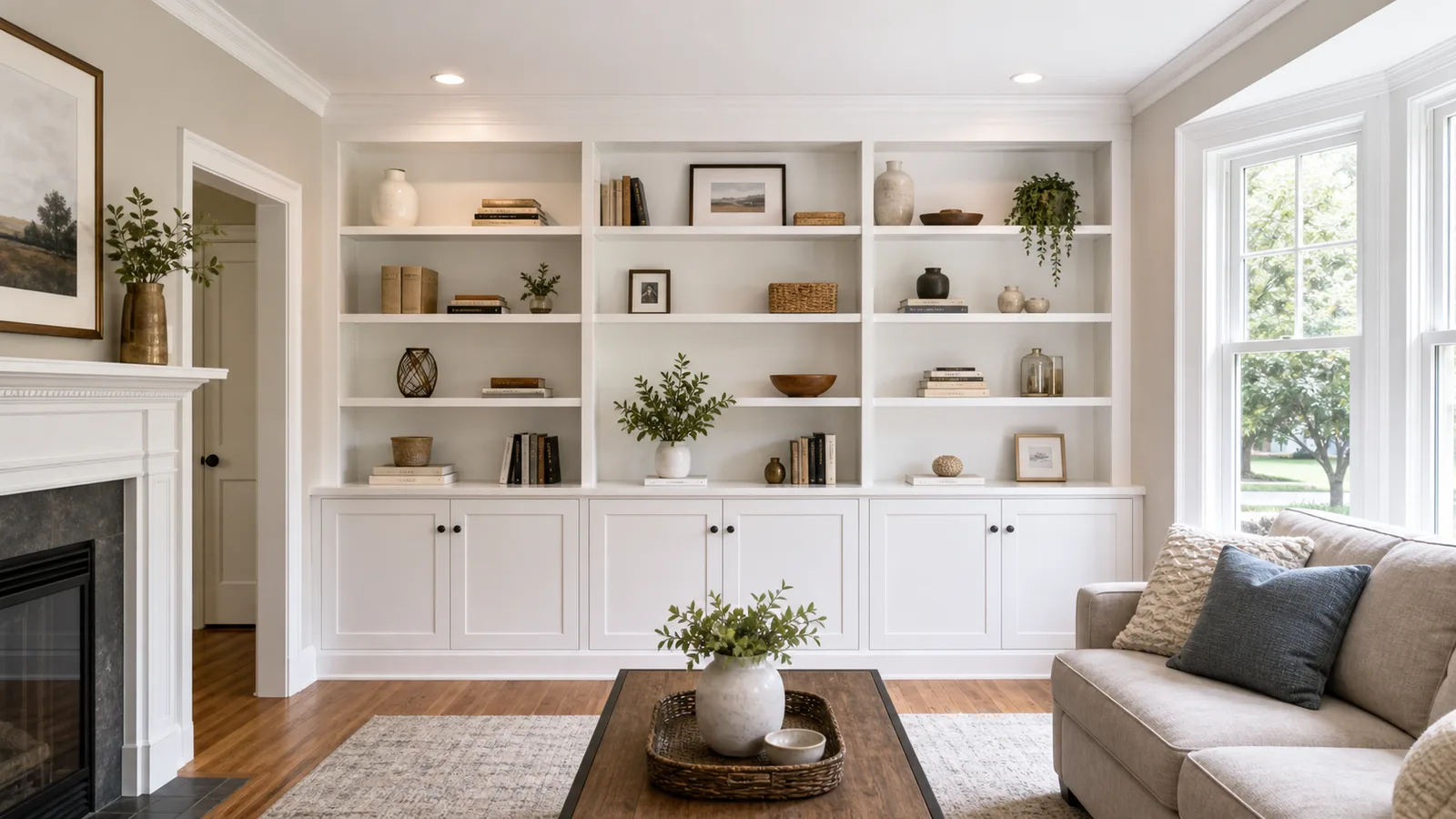
The detail that makes a house feel built, not assembled
Walk into an older Rochester home with original woodwork — deep baseboards, picture rails, a built-in buffet — and it feels solid in a way new builds rarely do. That feeling comes from finish carpentry. Custom built-ins and good trim are one of the highest-impact, lowest-disruption upgrades you can make: no plumbing, no structural drama, just craft that makes a room feel finished. They also photograph beautifully and help at resale.
---
What "built-ins" covers
- Bookcases and media walls built into a living room or office.
- Mudroom benches and lockers by the back door — hugely practical in a snowy-boot climate like ours.
- Window seats with storage in a bay or dormer (common in Rochester colonials and capes).
- Pantry and kitchen built-ins, banquettes, coffee bars.
- Closet systems that actually use the space.
- Fireplace surrounds and mantels.
---
What "trim" covers
- Baseboards and casing around doors and windows.
- Crown molding.
- Wainscoting, board-and-batten, picture-frame molding on walls.
- Coffered or beamed ceilings.
- Stair parts — newels, balusters, railings.
---
What it costs in 2026
Finish carpentry is labor-driven, so pricing varies with complexity and finish level:
- Built-in bookcase/media wall: $2,500–$8,000+ depending on size, design, and whether it's painted or stained.
- Mudroom bench + lockers: $2,000–$6,000.
- Window seat with storage: $1,500–$4,000.
- Trim packages: new baseboard and casing for a room runs a few hundred to ~$1,500; crown molding $8–$20+ per linear foot installed; wainscoting/board-and-batten $10–$30+ per square foot.
- Whole-home trim upgrade: scales with the house, often several thousand to tens of thousands.
Paint-grade (painted) is cheaper than stain-grade (real hardwood finished to show the grain).
---
Where built-ins pay off
- Mudrooms in our climate — a dedicated spot for boots, coats, and snow gear is daily value.
- Storage in awkward spaces — under stairs, dormers, eaves — that would otherwise go to waste.
- Character rooms — a living room with a real built-in reads as a step up.
- Small homes where built-in storage beats bulky freestanding furniture.
---
Matching older Rochester woodwork
This is where skill matters in our older homes. If you're adding trim or built-ins to a house with original 1920s woodwork, the new work has to match the existing profiles — the same baseboard height, casing style, and detail — or it looks bolted-on. Good finish carpenters can replicate or complement old profiles so additions look original. Mismatched trim is one of the most common tells of a cheap renovation in a historic home.
---
Mistakes to avoid
- Mismatched profiles that clash with a home's original woodwork.
- Cheap pre-fab cabinets sold as "built-ins" — they don't fit the space or last like real built carpentry.
- Over-trimming a simple home beyond its style — restraint reads better than excess.
- Skipping built-in storage in mudrooms and awkward nooks where it would earn its keep daily.
---
A practical next step
Walk your home and note two things: where you're short on storage (entry, under stairs, odd nooks), and whether your house has original woodwork any new work needs to match. That tells a carpenter both the function and the style to hit.
A good finish carpenter can design built-ins for your awkward spaces and match new trim to your home's existing woodwork so it looks like it was always there.