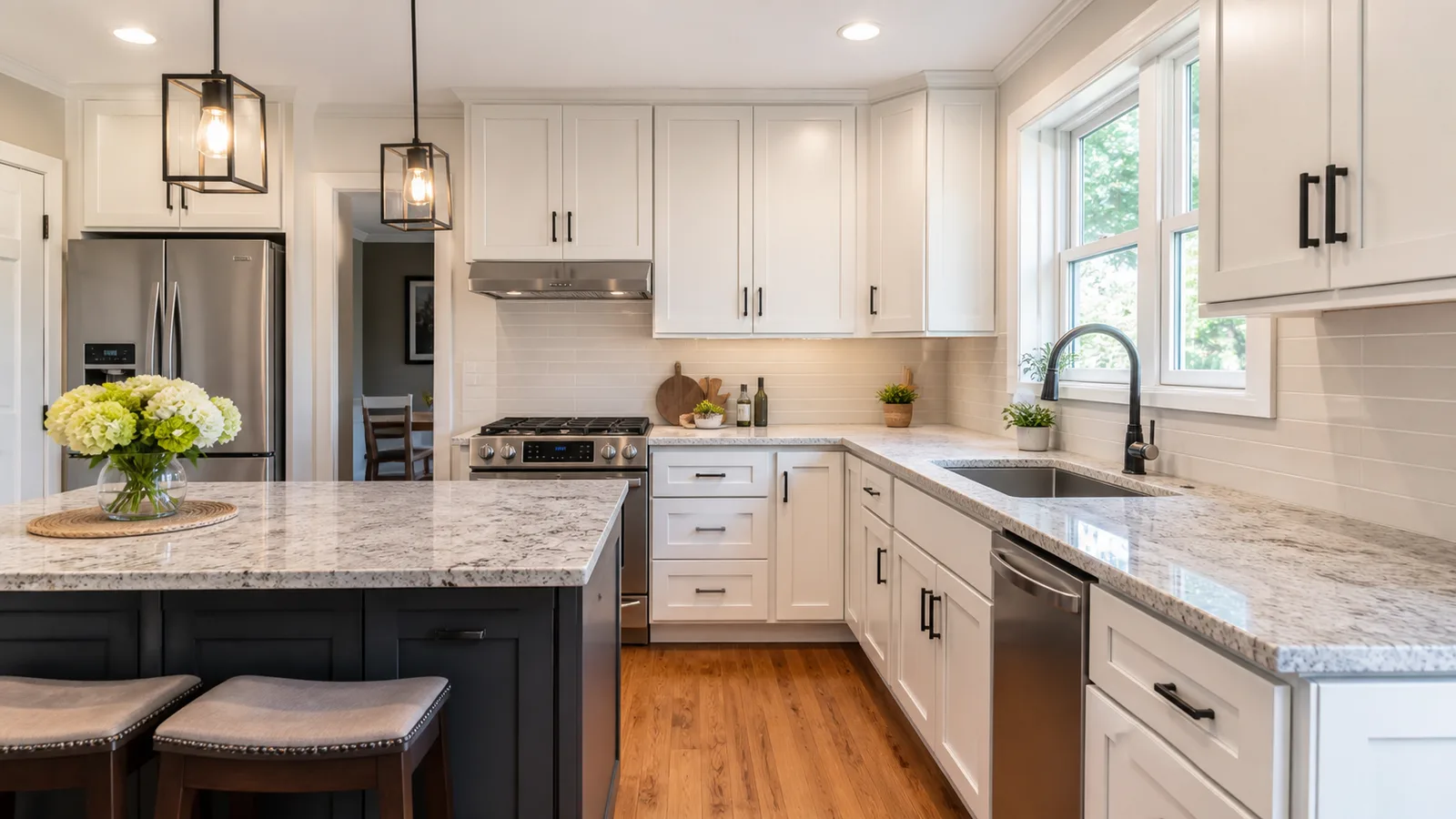
When the layout works but the kitchen looks dated
Not every tired kitchen needs to be gutted. If your layout functions, the cabinet boxes are solid, and you mainly hate how it looks, refacing can give you a new kitchen's appearance for a fraction of a full remodel. But refacing is the wrong move in some homes, and knowing the difference saves you from spending good money on a bad foundation.
---
What each option means
Refacing: the cabinet boxes stay; you replace the doors, drawer fronts, and hardware, and cover the visible box surfaces with a matching veneer or laminate. Same layout, new face.
Refinishing (a cheaper cousin): same boxes and doors, just sanded and repainted or restained. Works only if the doors themselves are in good shape and you like their style.
Replacement: everything comes out — boxes included — and new cabinets go in. This is the only option if you're changing the layout or the boxes are failing.
---
What it costs in 2026
For a typical Rochester kitchen:
- Refinishing (repaint/restain existing): $2,500–$6,000.
- Refacing (new doors, fronts, veneer, hardware): $6,000–$15,000.
- Full cabinet replacement: $12,000–$30,000+ depending on cabinet grade.
Refacing typically lands at roughly half the cost of replacement, and it's faster — days, not the weeks a full cabinet swap with demo takes.
---
When refacing is the smart call
- The layout works and you're not moving the sink, stove, or walls.
- The boxes are structurally sound — no water damage, no sagging shelves, no particleboard turning to mush.
- You want a faster, less disruptive project that keeps the kitchen mostly usable.
- The goal is appearance: new color, new door style, modern hardware.
When to replace instead
- You're changing the layout — moving appliances, adding an island, reconfiguring. Boxes have to move, so reface money is wasted.
- The boxes are failing: water-damaged under the sink, swollen particleboard, broken frames.
- You want different sizes or configurations — deeper drawers, taller uppers, a pantry — that the existing boxes can't provide.
- The boxes are low-grade and not worth dressing up.
---
The older-home check
In older Rochester kitchens, look hard at the cabinet under the sink and along exterior walls — decades of small leaks and humidity rot the boxes from the bottom. If the structure is gone, refacing puts a nice face on a failing box and you'll regret it. Also check that walls and floors are reasonably square; very old kitchens can be off enough that new doors highlight the gaps. A good contractor will tell you honestly whether your boxes are worth keeping.
---
Mistakes to avoid
- Refacing over damaged or low-grade boxes. You're paying to dress up something that should go.
- Refacing when you secretly want a different layout. If the flow bugs you now, new doors won't fix it.
- Skipping the under-sink and exterior-wall inspection before committing.
- Over-investing in a kitchen beyond what the home's value supports.
---
A practical next step
Open your cabinets and press on the boxes, especially under the sink. Are they solid? Do you actually like the layout, or do you want to move things? That answer points straight to reface (keep layout, sound boxes) or replace (change layout, or failing boxes).
A good kitchen remodeler will assess your boxes and tell you straight whether refacing gets you what you want or just delays a replacement.