The question most homeowners ask too late
By the time someone calls about a wet basement, they've usually already tried something — a coat of DryLok, a dehumidifier running constantly, maybe a drain tile system from a national waterproofing chain. Some of those fixes hold. Many don't, because the wrong method was used for the actual problem.
Rochester makes basements harder to keep dry than most. The clay-heavy glacial soil across Monroe County holds moisture like a sponge and barely drains. Freeze-thaw cycles crack foundations from November through March. Lake-effect snow melts fast against foundation walls, saturating the ground before it can drain. Spring water tables in parts of Irondequoit, Greece, and areas near the Genesee floodplain can sit within a few feet of the basement floor for weeks.
Older Rochester houses in Brighton, the 19th Ward, and the south wedge often have fieldstone or rubble foundations — porous by design. Managing water in those homes requires a different approach than a 1970s block-wall ranch in Penfield.
---
First: figure out what kind of water problem you actually have
The interior vs. exterior decision depends on the source of the water. There are three common sources, and they often get confused.
Hydrostatic pressure
Groundwater pushing in from below or through the walls due to saturated soil. You'll see water seeping through the floor-wall joint, bubbling up through slab cracks, or weeping horizontally through block walls — often after prolonged rain or during snowmelt. This is the most common issue in a Rochester spring.
Surface water intrusion
Rainwater or snowmelt running toward the house instead of away from it. Window wells that fill up, wet spots only during storms, and water near a downspout discharge point all point here. This is often a grading or drainage problem, not a foundation problem.
Crack-related leaks
Water finding a path through a specific crack or joint from settling, freeze-thaw movement, or construction defects. A single crack in a poured-concrete wall that leaks only during hard rain is a different fix than walls weeping on three sides after two weeks of wet weather.
Getting the diagnosis right matters — the solutions don't overlap cleanly.
---
When interior waterproofing is the right call
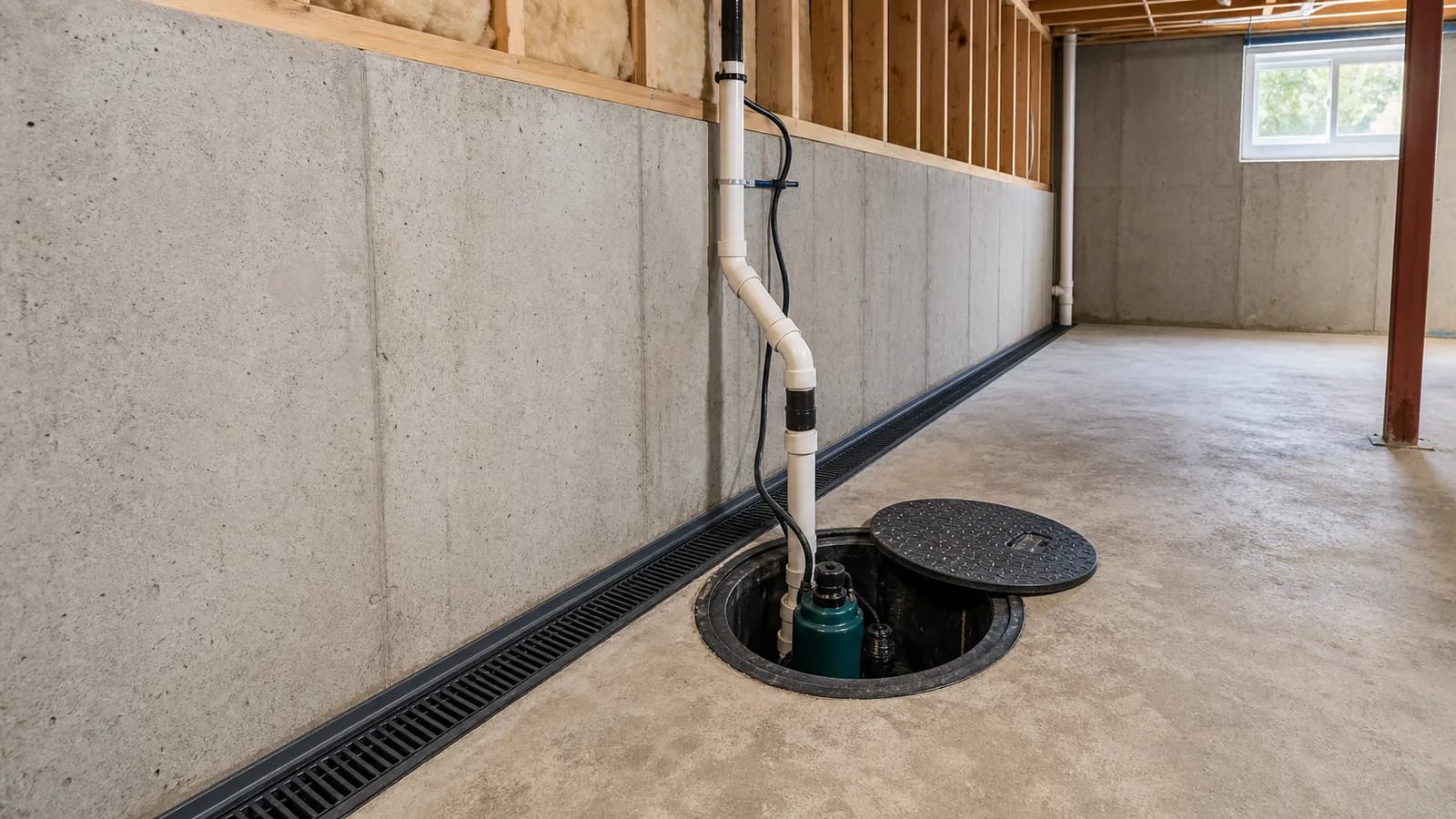
Interior drainage systems — perimeter drain tile, a sump pump, and sometimes wall panels that direct water to the drain — are effective for managing hydrostatic pressure coming up from below or seeping through the lower courses of the wall. They don't stop water from entering, but they capture it before it pools.
This approach makes sense when:
- Pressure is coming from the base of the wall or through the floor, not from above grade
- Foundation walls are structurally sound — no bowing, no major horizontal cracks
- Exterior excavation isn't practical due to landscaping, a deck, or property line clearance
Cost for a typical Rochester basement: $4,000–$9,000, depending on perimeter footage and whether the system includes a battery backup (it should). One caveat: if saturated clay is causing structural wall movement, managing the water indoors doesn't address the root cause.
---
When exterior waterproofing is the only real fix
Exterior waterproofing means excavating to the footing, applying a waterproof membrane to the outside of the wall, installing a drain board and perimeter drain at the base, and backfilling with clean gravel.
This is the right solution when:
- Water enters through the upper portion of the wall, above where an interior system can intercept it
- The foundation has significant cracks that need to be sealed at the source
- Fieldstone or rubble foundations need a drainage layer and membrane — the masonry can't be made watertight from inside
Cost: $12,000–$25,000+, depending on perimeter length, excavation depth, and what's in the way. Rochester's clay soil adds excavation time and disposal costs. When it's the right fix, it addresses the problem at the source rather than managing it indefinitely.
---
The mistakes that lead to bigger problems later
- Finishing before fixing moisture. Framing against a wet wall and drywalling over a slab that weeps in spring costs two to three times more to undo.
- Ignoring downspout discharge. Extensions that dump water two feet from the foundation, or buried runs that are cracked, are responsible for a large share of wet basement calls that have nothing to do with the foundation. Redirecting discharge 6–10 feet away solves some of these entirely.
- Regrading overlooked. Soil settles and often grades back toward the house over time. A proper slope away from the foundation — 6 inches over the first 10 feet — is cheap to fix and eliminates a lot of surface water intrusion.
---
A practical next step
Before calling a waterproofing contractor, do one inspection after the next significant rain or snowmelt event. Walk the basement perimeter and note where water appears, how high it gets on the wall, and whether it's coming through the wall or up from the floor. Take photos. Then check the exterior: where are the downspouts discharging, does the grade slope toward or away from the house, are any window wells holding water?
That tells you whether you're dealing with surface drainage, hydrostatic pressure, or a crack issue — and makes any contractor conversation faster. If you're getting quotes and nobody asks these questions before recommending a system, that's worth noting.