What Rochester's Heating Season Actually Costs You
Rochester averages around 6,700 heating degree days per year — well above the national average. From October through April, your furnace runs hard. NYSEG natural gas customers who heat an older two-story colonial can easily see $200–$350/month in peak winter months. The lake-effect winters don't help. Cold air isn't just uncomfortable; it's expensive.
The attic is where most of that heat escapes. Heat rises. An under-insulated attic is a direct path from your furnace to the outdoors.
---
What "Under-Insulated" Means in Rochester
Most homes built before 1990 — and Rochester's housing stock skews old, with a significant share dating to the 1940s–1970s — have attic insulation in the R-11 to R-19 range. That was code-compliant when it was installed.
Current NYS Energy Code for Climate Zone 5A (Rochester's zone) calls for R-49 in attics.
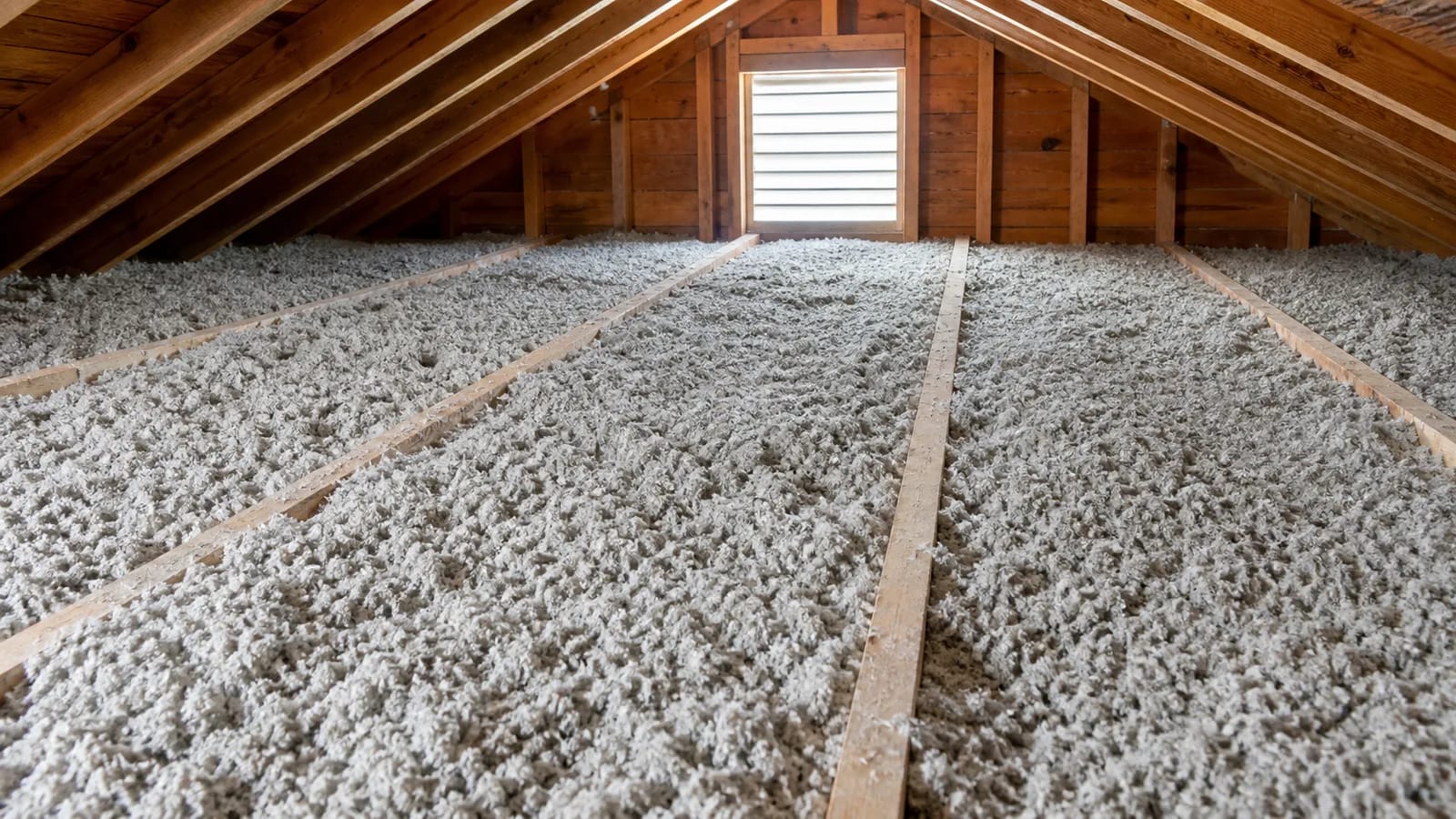
If you pull down your attic hatch and see 3–4 inches of old fiberglass batts, you're probably sitting around R-13. Getting to R-49 means adding roughly 10–12 inches of blown cellulose or fiberglass on top of what you have — assuming the existing insulation is dry and undamaged.
---
Real Cost Ranges (2026)
These are rough ranges for a typical 1,200–1,500 sq ft attic floor:
- Blown cellulose top-up (existing insulation intact, no removal): $1,500–$3,000
- Full removal + reinstall (wet/damaged insulation, vermiculite, animal intrusion): $4,000–$8,000+
- Air sealing + top-up combined (the right way to do it): add $500–$1,500 to the top-up cost
Costs vary based on attic access, existing depth, whether ductwork runs through the space, and what you find once you open it up. Any contractor who gives you a firm quote without going into the attic first isn't giving you an accurate number.
---
Honest Payback Estimates
A well-executed attic insulation upgrade in a Rochester home that was sitting at R-13 can reduce heating and cooling costs by 15–25% annually. On a $2,400/year heating bill, that's $360–$600/year in savings.
At $2,000 for a top-up job with air sealing, payback runs roughly 4–6 years — solid by any home improvement standard.
But those numbers assume:
- You were significantly under-insulated to begin with
- Air sealing happened before insulation was added
- The insulation was installed correctly (no gaps, soffit vents not blocked)
- Your heating system isn't the primary problem
If you're already at R-30 and thinking about topping up to R-49, the incremental savings are smaller. The law of diminishing returns applies — going from R-0 to R-19 saves far more than going from R-30 to R-49.
---
When Attic Insulation Is a Clear Win
- Cold upstairs rooms in winter. If the second floor is noticeably colder than the first, the attic is usually a factor.
- Ice dams. Ice dams form when heat escapes through the attic, melts snow at the roof peak, and refreezes at the cold eaves. More insulation (combined with air sealing) reduces the heat loss that causes them.
- You know you're under R-25. At that level in Rochester's climate, upgrading almost always pencils out.
- NYSERDA rebates are available. Through the EmPower+ and Clean Heat programs, NY homeowners may qualify for rebates or subsidized installations based on income and energy use. Your utility (NYSEG, RG&E) may stack additional incentives. Check current availability at nyserda.ny.gov — programs and income thresholds change, so don't rely on what a neighbor was offered two years ago.
---
When Insulation Is Oversold
- Air leakage is the real problem. If your attic has open top plates, unsealed penetrations around plumbing and electrical, or a poorly detailed attic hatch, adding more insulation without sealing those gaps first is wasted money. Air sealing always comes first.
- Your windows aren't the issue. Windows get blamed constantly. In most older Rochester homes, the attic loses more heat than all windows combined. Check the attic before replacing windows.
- You're already at R-38 or higher. If a previous owner upgraded, topping up to R-60 may not pay back within your ownership horizon.
- The furnace is the real problem. A 60% AFUE furnace in a house with decent insulation costs more to operate than a 95% AFUE furnace in a slightly under-insulated house.
---
Mistakes That Wipe Out the Savings
- Insulating over air leaks. Fluffy insulation slows conduction; it doesn't stop air movement. Seal first.
- Blocking soffit vents. Attic ventilation matters for moisture control and roof longevity. Baffles (rafter vents) should be installed before blowing insulation to keep the eaves clear.
- Ignoring the attic hatch. An uninsulated pull-down stair or hatch is a hole in your thermal envelope. An insulated hatch cover is a $50–$150 fix with immediate impact.
- Ignoring ductwork in the attic. If your HVAC ducts run through an unconditioned attic, even R-49 insulation below them means the ducts are outside your thermal boundary. That's a separate problem worth addressing.
---
A Practical Next Step
Get an energy audit before you commit to any scope of work. NYSERDA's Home Energy Assessment program (or a utility-run audit through NYSEG/RG&E) will identify where your home is actually losing heat, measure current insulation depth, and flag air leakage points. Many audits are free or low-cost for NY homeowners. That assessment tells you whether the attic is your biggest lever — or whether there's something more important to address first.