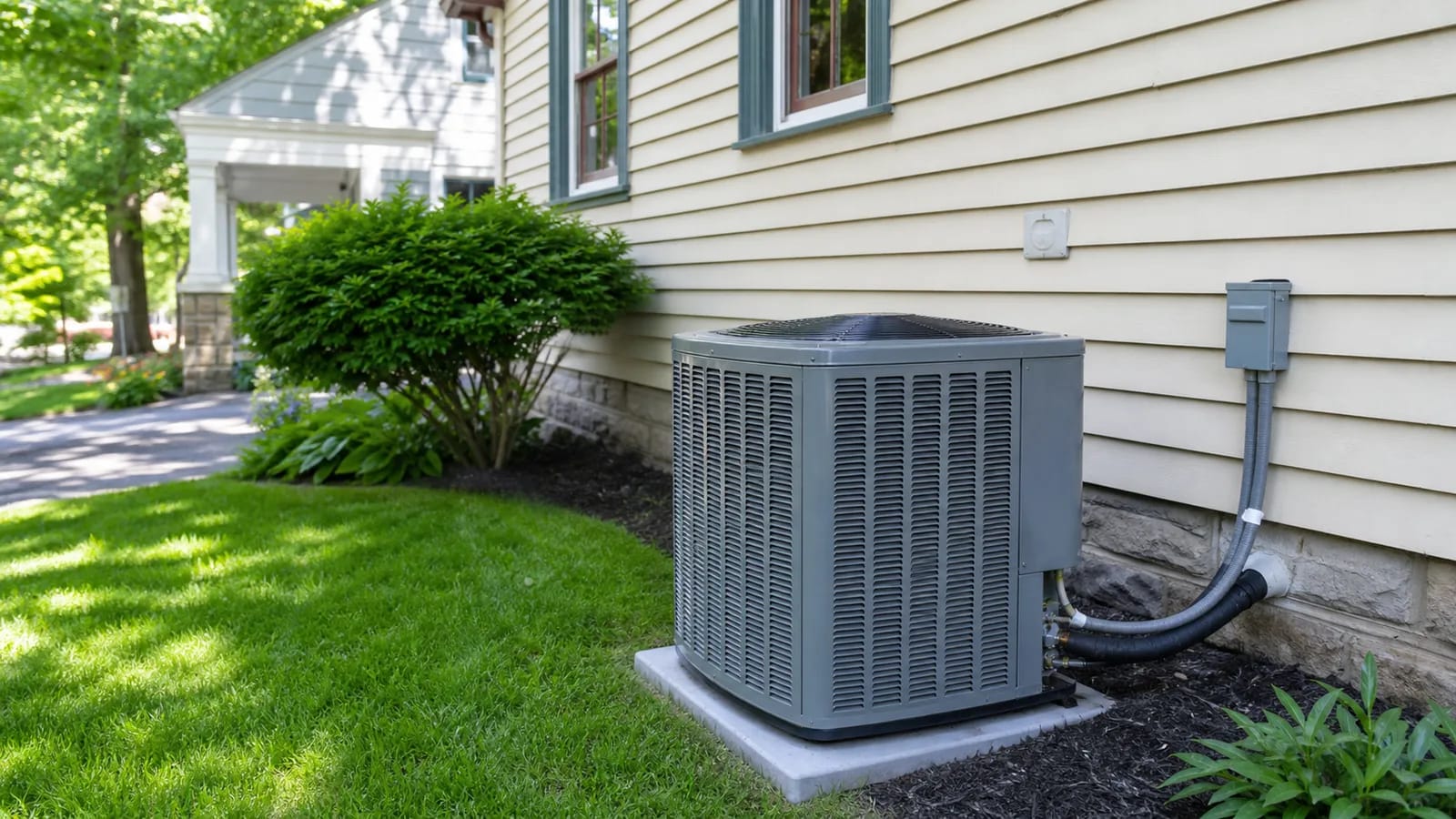
Short summers, but the humidity is real
Rochester doesn't get Arizona heat, but our summers bring stretches of 85-plus with heavy lake humidity, and they've been getting longer. An AC that limped through last July usually doesn't get better on its own. The worst time to discover your system is done is the first 90-degree week, when every HVAC company in Monroe County is booked solid. Spring and early summer is the smart window to handle it.
---
Signs your AC is near the end
- It's 12–15+ years old. That's the typical service life here. Past it, you're on borrowed time.
- It uses R-22 refrigerant. Older systems do, and R-22 is phased out and expensive. A big leak on an R-22 system usually tips toward replacement.
- Repairs are stacking up. A second or third repair in a couple of seasons is money toward a unit that's leaving anyway.
- Rooms won't cool evenly, it runs constantly, or the bills keep climbing.
- It's noisy or short-cycles (turns on and off rapidly).
---
Repair vs replace
Repair makes sense when the unit is under ~10 years, the problem is a single part (capacitor, contactor, fan motor), and it's not an R-22 system. These are often a few hundred dollars and buy real years.
Replace when the system is old, on R-22, leaking refrigerant, or facing a compressor failure (the most expensive part — usually not worth fixing on an aging unit). If your furnace is also old, replacing both together is cheaper than two separate jobs, since they share the air handler and labor.
---
What it costs in 2026
- Straight AC replacement (existing ductwork): $5,000–$9,000 for a quality system, more for high-efficiency or larger homes.
- AC + furnace together: $9,000–$16,000.
- Consider a heat pump instead: for a similar install you get cooling and efficient heating, plus NYS Clean Heat rebates. Worth pricing side by side before you commit to plain AC.
A bid well below these ranges usually means an undersized unit, no permit, or cut corners on the install.
---
Sizing is where cheap installs fail
Bigger is not better. An oversized AC cools the air fast but shuts off before it pulls the humidity out, leaving the house cold and clammy and the unit short-cycling itself to an early grave. Correct sizing comes from a load calculation based on your home, not a quick guess off the square footage. In humid Rochester summers, right-sizing is what gives you comfort, not just a lower thermostat number.
---
Why booking early pays
- Availability. In a July heat wave you wait days or weeks; in May you pick the date.
- Calmer decisions. You're comparing quotes, not panic-buying whatever can be installed tomorrow.
- Off-peak pricing. Early-season is often less crowded and easier to schedule cleanly.
---
Mistakes to avoid
- Waiting for it to fully die in the hottest week, then taking the only available installer at the only available price.
- Replacing the AC alone when the furnace is also ancient — you'll pay twice on labor within a year or two.
- Letting someone size by rule of thumb. Insist on a load calculation.
- Ignoring the heat-pump option before defaulting to plain AC.
---
A practical next step
Find your system's age (look for the manufacture date on the outdoor unit's label) and note whether it's R-22 or R-410A. List the symptoms: uneven cooling, rising bills, repeat repairs. If it's old or on R-22, start getting quotes now, in spring, not in the July rush.
A good HVAC contractor will size the replacement properly and show you the AC-versus-heat-pump comparison so you're not overpaying for the wrong system right before the heat arrives.