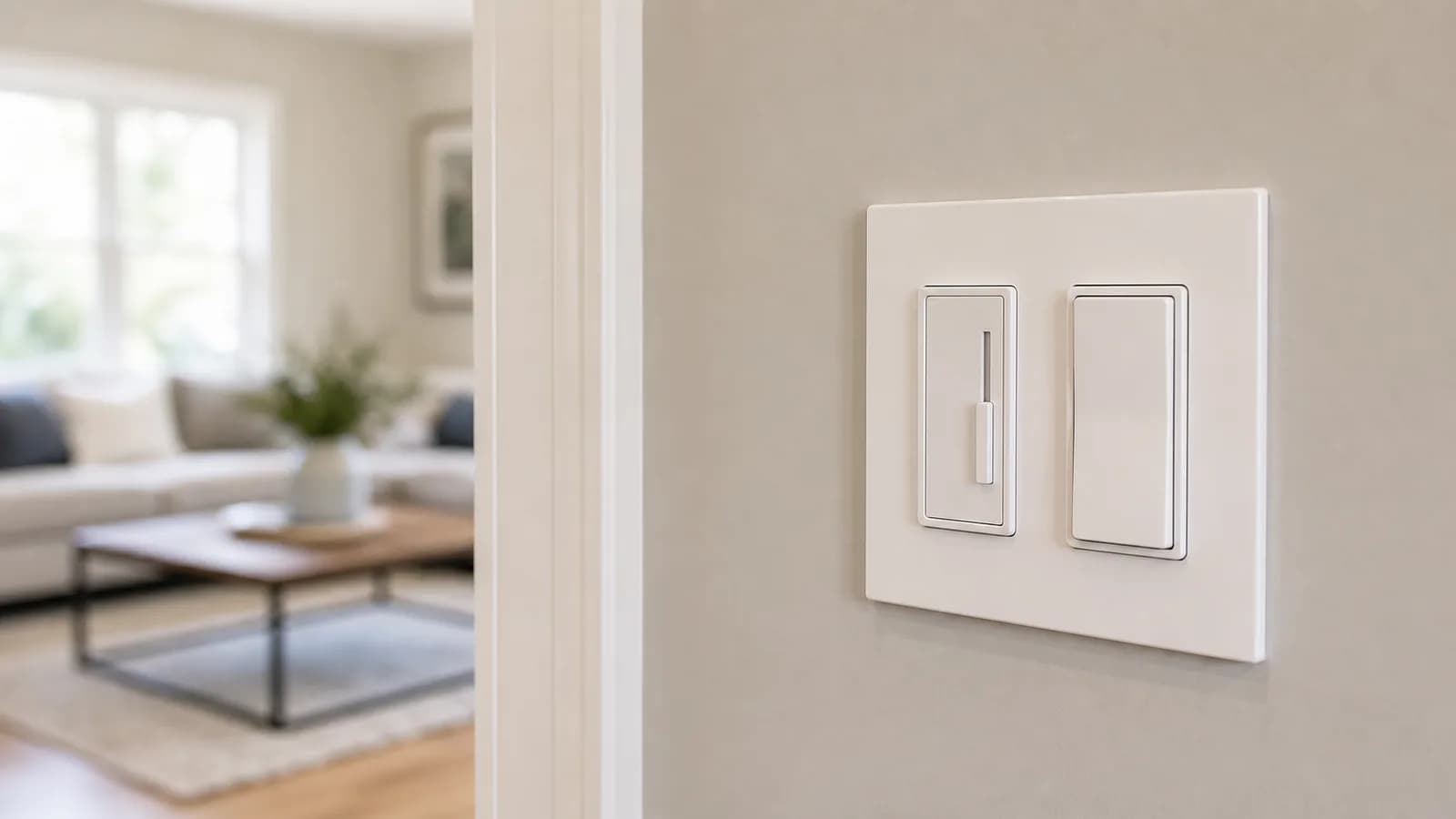
Small switch, big difference
Swapping a plain switch for a dimmer or a smart switch is one of the most satisfying small upgrades — better light control, app and voice control, schedules. Mostly straightforward, with a couple of wrinkles in older homes.
The neutral-wire catch
This is the one that surprises people. Most smart switches need a neutral wire in the box to power their electronics. Many older Rochester homes wired switches without a neutral run to the switch box. Open the box and if there's no neutral (the bundle of white wires), you either need a smart switch model that works without a neutral, or an electrician to run one. It's the single most common reason a smart-switch project stalls.
LED and dimmer compatibility
If you've switched to LED bulbs (most people have), an old dimmer may make them buzz, flicker, or not dim smoothly. The fix is an LED-compatible (CL-rated) dimmer matched to your bulbs. Mismatched dimmer-and-LED is behind most "my dimmer is weird" complaints.
Three-way switches
A light controlled from two spots (top and bottom of stairs, both ends of a hall) uses three-way switches, which are wired differently. Smart three-way setups have their own requirements. If your switch is one of a pair controlling the same light, mention that — it changes the part and the wiring.
DIY or call someone
A basic dimmer swap with the breaker off is a common DIY. The moment there's no neutral for a smart switch, a three-way circuit, aluminum or old wiring, or you're unsure what's in the box, an electrician makes it clean and safe.
Cost
Devices are inexpensive; installation is quick. Running a neutral wire where there isn't one is the cost variable, since it may mean opening the wall.
A practical next step
For a smart switch, turn off the breaker and check the box for a neutral (white) wire — that decides whether it's a simple swap. For LED flicker, get a CL-rated dimmer matched to your bulbs. No neutral, a three-way, or old wiring? Call an electrician.